
Retail Media Radar - August 2026: The walls come down
Retail media grew up behind walls. Every retailer built its own network, set its own prices, marked its own homework and kept its data firmly to itself. That model made the first wave of money. It won't make the next one.
This month's stories all point the same way. Walmart is letting advertisers buy display ads through an open auction instead of a rate card. Amazon has started telling brands which other retailers its ads drive sales through, something nobody inside a walled garden has done before. In the UAE, a fuel and convenience retailer has launched the region's first mobility retail media network. Albertsons has put a full grocery shop inside ChatGPT. And in the shopping centre world, Westfield is proving that even the sound in the air can be sold as measurable media.
Five very different businesses, one shared conclusion: the value is no longer in the walls. It's in the data, and in being wherever the shopper happens to be.
Walmart lets the market set the price
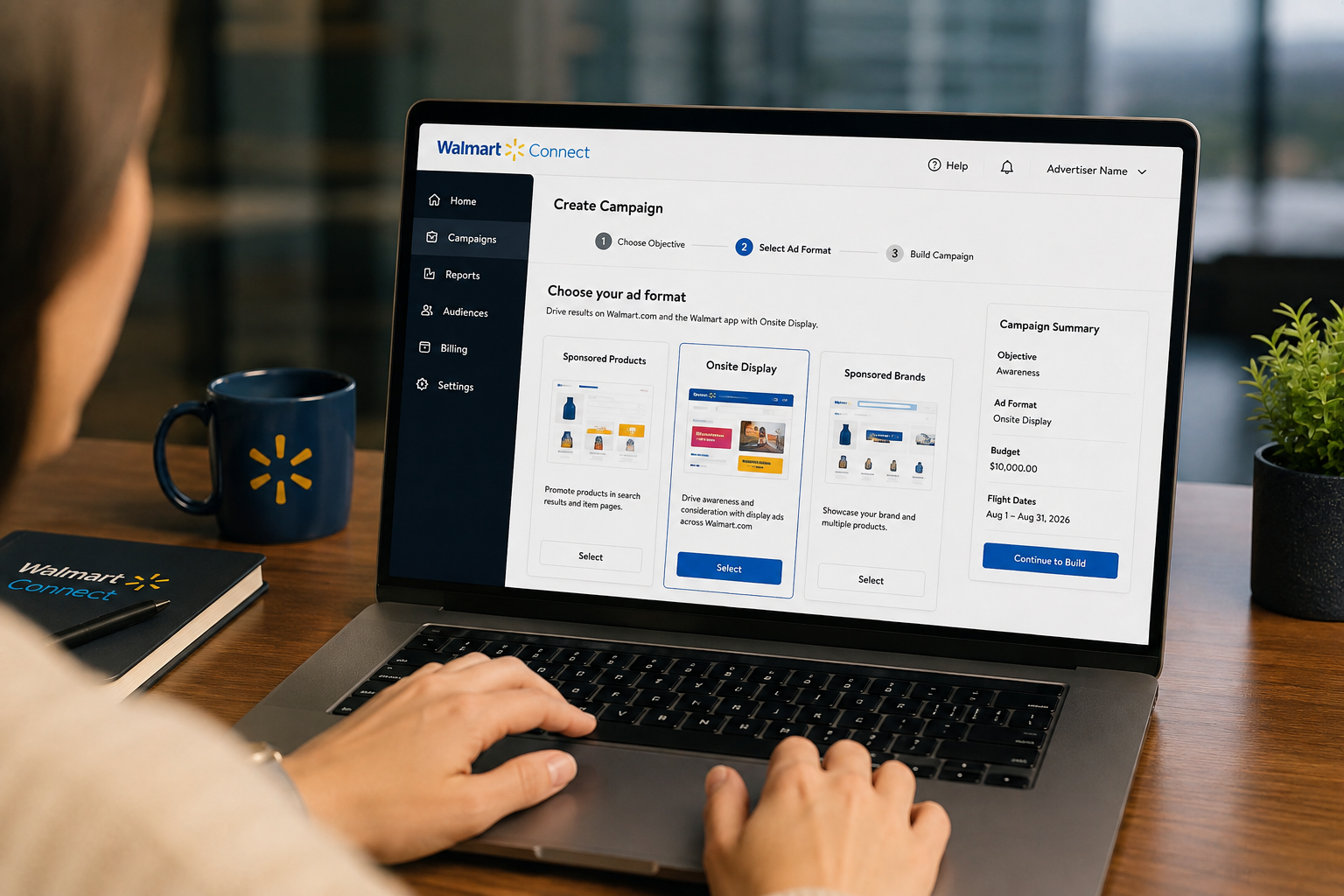
Walmart Connect has launched a self-serve platform for onsite display advertising in Canada, and the interesting part is not the software. It's the pricing. Display ads on Walmart's site and app were traditionally bought like billboard space: a fixed rate card, an insertion order, and a Walmart team running the campaign for you. Under the new model, advertisers set their own bids in an auction and pay whatever the market decides, adjusting in real time as demand rises and falls.
Advertisers can now build, launch and manage display campaigns themselves, with AI-driven optimisation, forecasting and reporting built in. Walmart has even added a training module to its Connect Academy (in English, French and Mandarin) to help brands get comfortable. Managed service is still there for those who want it, but the direction is clear.
Auctions change the economics. Instead of committing budget months in advance at a fixed price, brands can move money in and out as demand shifts, and pay what a placement is actually worth on the day.
Self-serve opens the door to smaller advertisers. A brand that could never justify a managed-service contract can now run display on Walmart with a modest budget and a laptop.
This is the same journey sponsored search ads went on years ago: start with managed service at premium prices, then open the auction and let the long tail of demand in. Display is simply next.
Why it matters: search-style economics are spreading to every retail media format. Once one major retailer prices display through an auction, fixed rate cards everywhere else start to look expensive and opaque. Retailers still selling display off a PDF should take note; the clock is ticking.
Amazon starts naming names
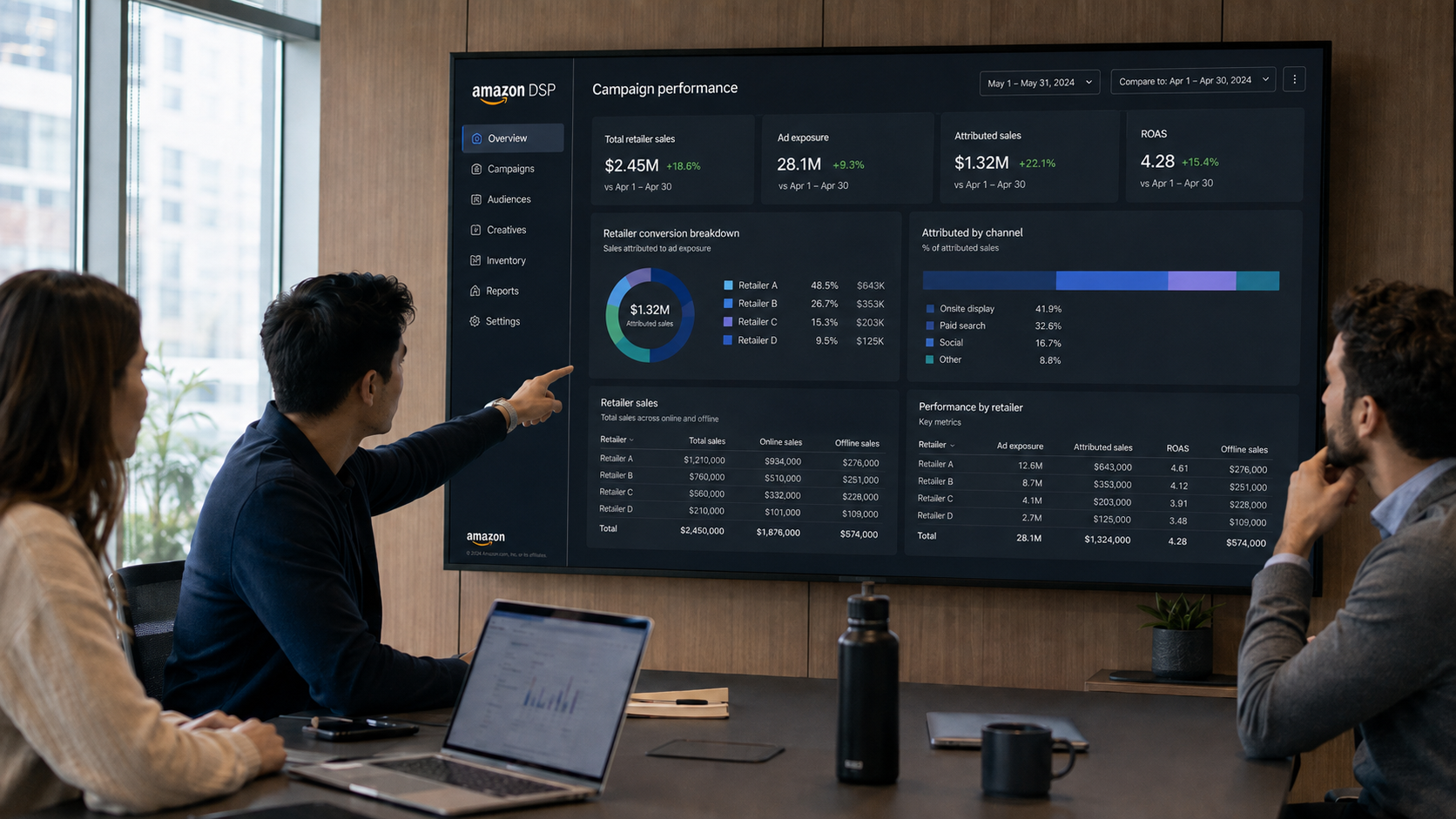
When a brand runs ads through Amazon's ad-buying platform (its DSP), some of the resulting sales happen on Amazon, and plenty happen elsewhere: in supermarkets, pharmacies and other retailers' stores. Amazon has measured that spillover for a while, but only in vague terms. Its Omnichannel Metrics tool would tell you that offline sales happened, without saying where.
That has now changed. As of July, US advertisers can see those offline sales broken down by the specific retailer where the purchase took place. It's the first time Amazon has named other retailers inside its own measurement product, and it lands alongside independent research suggesting that attribution confined to a single retailer's walls misses somewhere between a third and a half of a campaign's true impact.
For brands, the practical win is budget allocation. Knowing not just that your Amazon ads drove offline sales, but which retailers they drove them through, changes how you split money between retail media, national media and trade spend.
The move caps a deliberate build-up: category-level offline measurement in 2025, category breakdowns in April, access to independent measurement studies in May, and now named retailers in July.
There's a strategic message underneath. Amazon is positioning its measurement as the view above everyone's walls, not just another garden alongside them.
Why it matters: cross-retailer measurement is the thing brands have been asking for since retail media began, and the biggest walled garden of all has just started selling it. Retailers who can't credibly prove their own contribution to a brand's sales will find Amazon perfectly happy to tell that story for them, on Amazon's terms.
Westfield turns the shopping centre into a media channel (sound included)
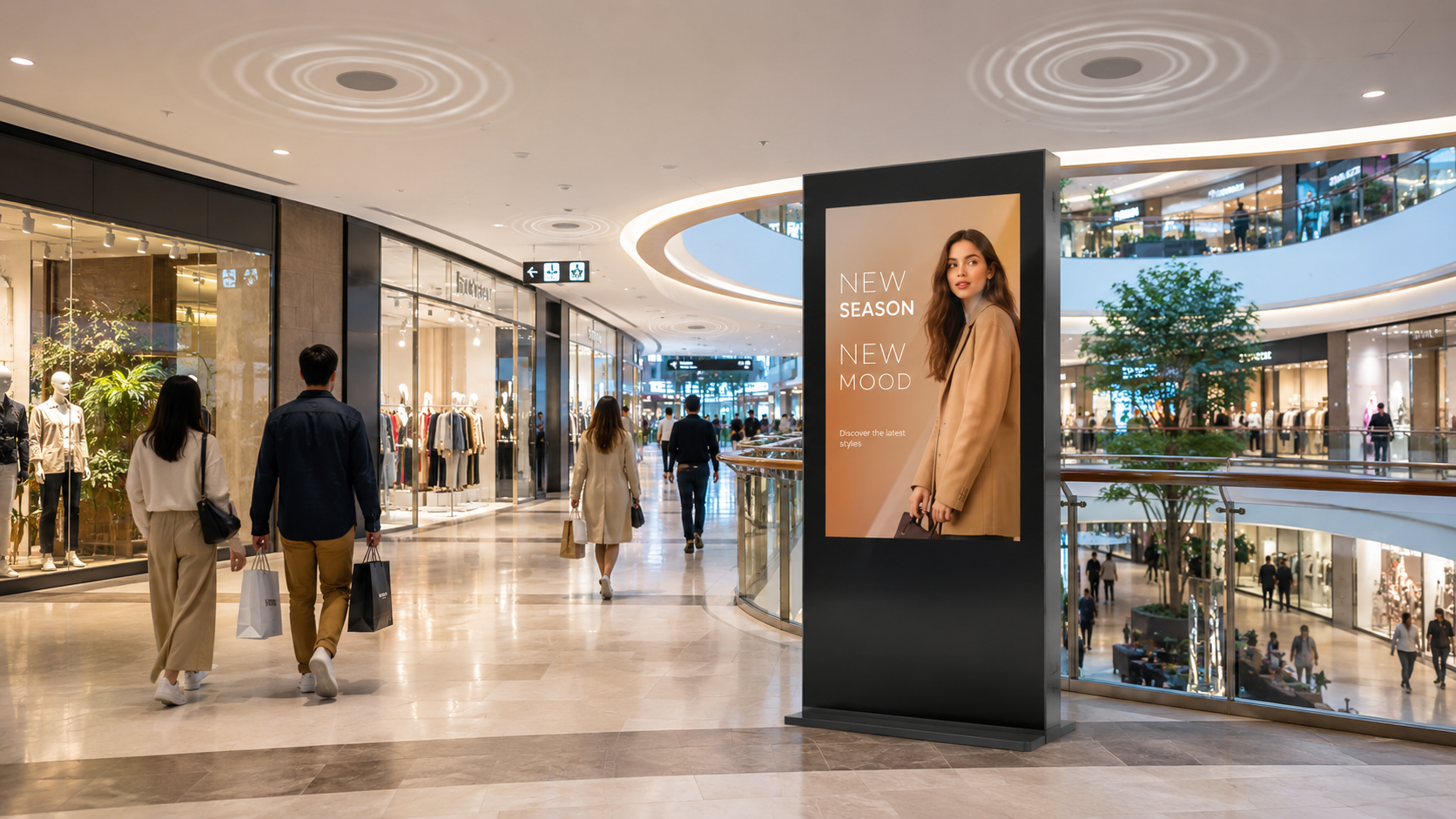
Shopping centre owners have watched retailers build lucrative media businesses and asked an obvious question: we own the space, the screens and the footfall, so why not us? Westfield Rise, the in-house media agency of mall giant Unibail-Rodamco-Westfield, is answering it more ambitiously than anyone. Its latest move, a partnership with digital advertising platform Azerion, turns the background audio in URW's 17 French shopping centres into bookable ad inventory. From this autumn, brands will be able to buy "Shopper Audio" spots targeted by location within the centre, time of day and footfall, sold programmatically like any digital channel.
The demand side is moving too. A joint study from Westfield Rise US and Hello Sunshine's Gen Z brand Sunnie found that Gen Z is rediscovering the mall as its modern "third space", a place to meet and hang out rather than just transact. The study's blunt conclusion to brands: if you have a Gen Z strategy, you need a mall strategy.
Landlord retail media is maturing fast: first screens, then programmatic targeting built on shopper data, and now ambient audio. Each step makes the physical centre look more like a media platform and less like a landlord with some posters.
The Gen Z findings give that inventory an audience story. A generation that advertisers struggle to reach on traditional channels is choosing to spend its free time inside these venues.
For brands, malls now offer something rare: a high-attention physical environment with digital-style targeting and measurement attached.
Why it matters: retail media is no longer only a retailer's game. Property owners with millions of visits and increasingly rich audience data are building networks of their own, and the line between real estate income and media income is starting to blur. For anyone who owns physical space with footfall, the question has shifted from whether it can be monetised as media to how quickly, and how well.
Taking retail media to the forecourt in the UAE
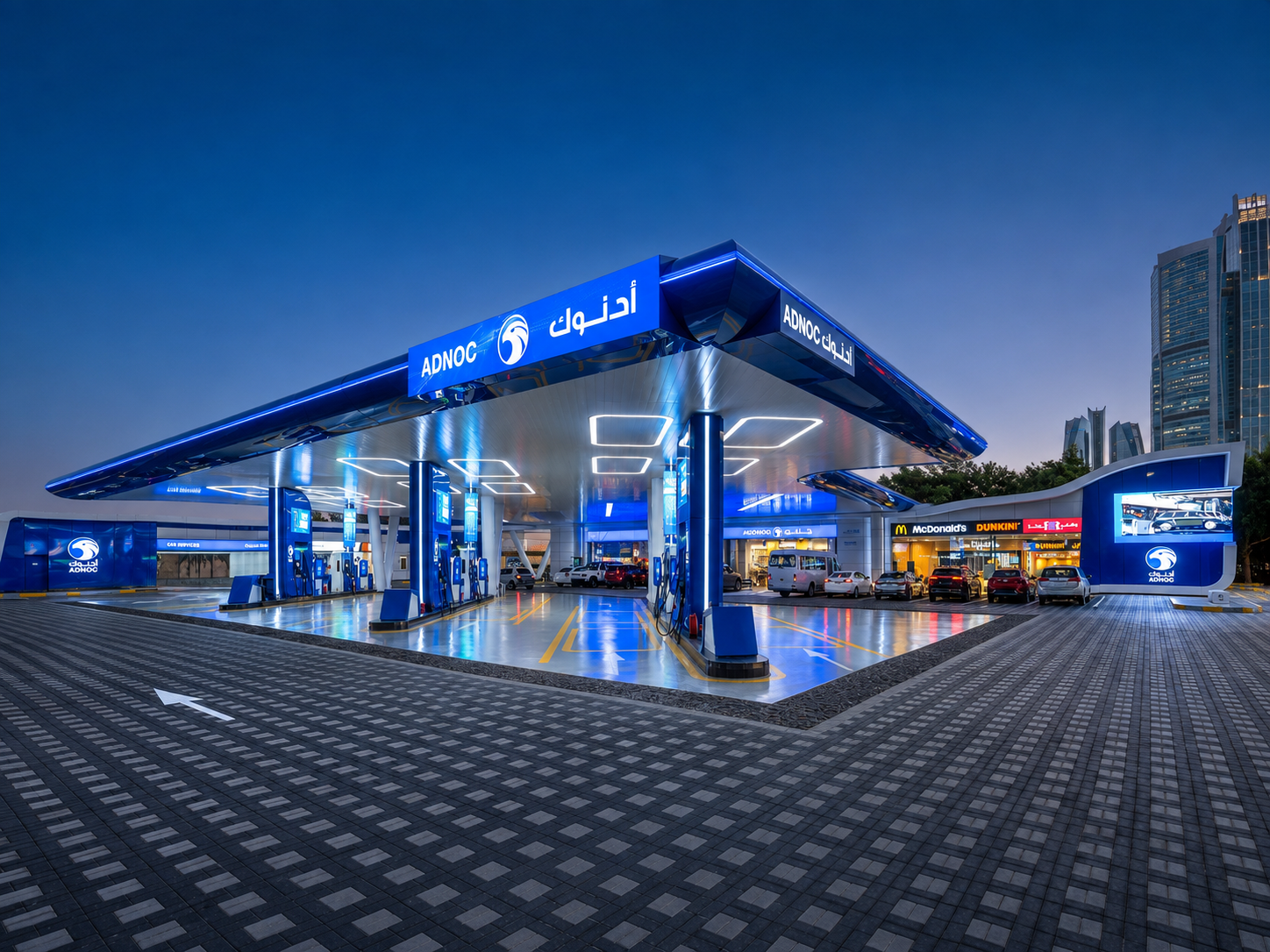
Retail media in the Gulf has just gained its first non-grocery heavyweight. ADNOC Distribution, the UAE's largest fuel and convenience retailer, has launched Engage by ADNOC, described as the region's first full-funnel retail media network run by a mobility retailer. In plain terms: the screens, apps and digital channels across ADNOC's service stations and convenience stores are now advertising space that brands can buy, targeted using data from more than 2.7 million ADNOC Rewards loyalty members.
The scale is what makes it credible. ADNOC serves nearly 700,000 customers a day and processes over 250 million transactions a year. Most people fill up or grab a coffee weekly or more, which gives Engage a frequency of contact that even supermarkets would envy, and every one of those visits is tied to real transaction data through the loyalty programme.
This is not traditional forecourt advertising. Old-style petrol station media was context only: a poster by the pump. Engage connects in-station screens and digital channels to loyalty data, so campaigns can be targeted and measured against actual purchases.
The "sofa to station" positioning matters. ADNOC is selling reach across a customer's whole day, from app to forecourt to convenience store, not a single ad slot.
It confirms the GCC as retail media's next battleground, with retailers beyond grocery now racing to monetise first-party data across mobility, convenience and quick-service formats.
Why it matters: the Gulf is skipping the slow evolution Western retail media went through and launching straight into loyalty-connected, full-funnel networks. For brands in the region, the question is no longer whether retail media exists there. It's which retailer's customer data is worth buying, and that's exactly the race worth being early to.
Albertsons puts Safeway inside ChatGPT
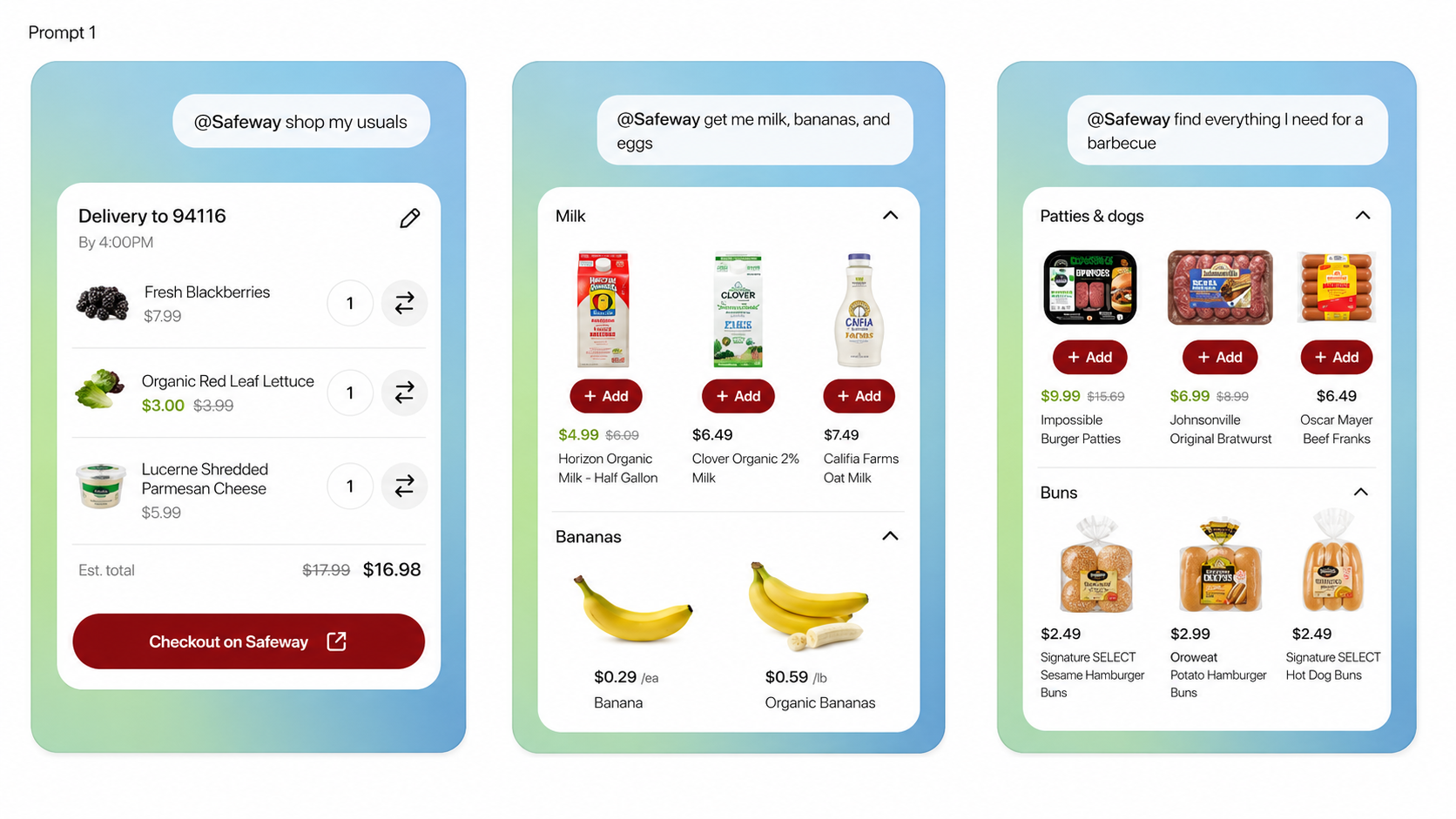
You can now do your Safeway shop without visiting Safeway. Albertsons has launched a Safeway plugin for ChatGPT that lets customers build a grocery basket by simply describing what they want. Ask for your usual weekly items, paste in a recipe, upload a photo of a dish, or share a scribbled list, and the assistant turns it into a cart. Shoppers review and adjust the basket, then hop across to Safeway's own platform to check out, keeping loyalty, payment and fulfilment in Albertsons' hands.
Albertsons frames it as making grocery shopping "as simple as having a conversation", and as meeting customers wherever they choose to shop. Behind the friendly framing sits a serious strategic bet: that a growing share of shopping journeys will start inside AI assistants rather than on retailer websites or search engines.
This is agentic commerce arriving in mainstream grocery, not a lab demo. Discovery, product selection and basket-building happen inside ChatGPT; the retailer keeps checkout and the customer relationship.
Recipe, photo and list-based shopping shows where conversational interfaces genuinely beat search: real shopping intent arrives in messy, human formats, and the assistant turns it into a basket in one step.
The defensive logic is just as important as the innovation story. If shoppers move their discovery into AI assistants, retailers who are not plugged in simply won't be in the room when the basket gets decided.
Why it matters: shelf placement is becoming agent placement. When an AI assistant chooses which handful of products a customer ever sees, product data quality, availability feeds and retailer integrations become the new merchandising. Retail media will follow the shopper into these surfaces, and the networks that work out how to stay relevant inside an agent-led journey will own the next chapter of the channel.
Step back from the individual stories and the pattern is hard to miss. Auctions are opening up the buying. Cross-retailer measurement is opening up the proof. Fuel retailers and landlords are opening up the club. AI assistants are opening a whole new front door to the shop.
For years, a retail media network's walls were its moat: control the inventory, control the data, control the story. That era is ending. In a more open market, the quality of your data, the credibility of your measurement and the speed of your activation are on display for everyone, and the networks that thrive will be the ones happy to be compared.