
Retail Media Radar - July 2026: Make the numbers mean something
Retail media has got scale. The question now is whether it can make the numbers mean something.
This month’s stories all point to the same pressure on the market. Kroger is taking purchase data directly into TikTok. dunnhumby is attempting to solve the industry’s fragmentation problem by connecting multiple retail networks under a shared standards framework. Albertsons is using shopper insight to shape creative before a campaign is even made. CVS is betting that AI-powered measurement will set it apart. And 7-Eleven is putting a measurable value on in-store audio.
Different retailers. Different approaches. One common theme.
Scale gets you in the room. What keeps brand investment - and grows it - is the ability to connect data, media and sales in a way brands can actually trust.
Kroger takes its purchase data onto TikTok
In June, Kroger Precision Marketing announced a self-service integration with TikTok that lets advertisers reach Kroger shoppers on the platform using purchase-based audience data. Advertisers can now activate Kroger’s loyalty insights inside TikTok’s own ad-buying tools, reaching shoppers from product discovery through to the purchase decision. The deal follows Kroger’s Google DV360 integration in March and reflects a broader strategy: exporting first-party data to the platforms where shoppers already spend their time.
Kroger’s data shows households that engage with social content spend twice as much as the average Kroger customer - and more than two-thirds of shoppers surveyed said social media influenced at least one grocery, household or personal care purchase in the past six months.
The integration is genuinely self-service: advertisers plan, buy and optimise campaigns in TikTok’s own platform, with Kroger’s purchase data as the audience layer. That removes one of offsite retail media’s biggest friction points - the separate managed-service process outside existing workflows.
Together with the DV360 deal, this continues a pattern of exporting retail audiences into the platforms brands already use - positioning the data, not the owned inventory, as the asset.
Kroger's latest move reinforces an important shift. Retail media is becoming less about where the ad appears and more about the quality of the data behind it. As retailers make their audiences available across platforms like TikTok and DV360, first-party purchase data becomes the real product. Brands will increasingly choose the retailer with the strongest customer signal, not simply the biggest media network.
From retail media networks to retail media ecosystems
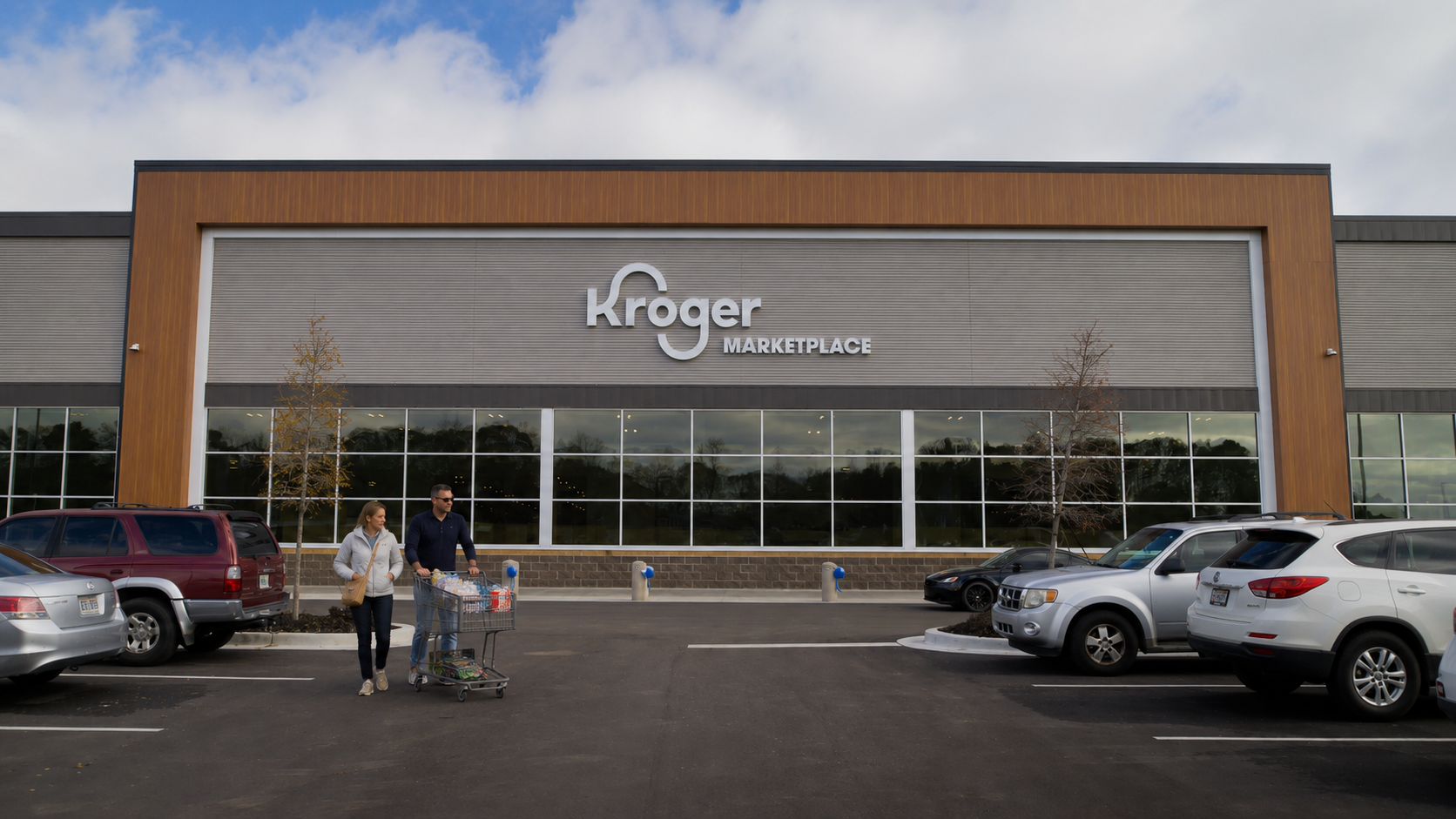
dunnhumby has announced the dunnhumby network alliance, a new proposition designed to give brands and agencies a single activation route across multiple retail media networks.
Built with ad tech company Kevel, the alliance enters pilot phase this summer with Tesco, B&Q, John Lewis and Waitrose. The pilots will span household, DIY, health and beauty, and grocery, with the aim of letting brands plan, activate and measure campaigns across participating retailers without managing each relationship in isolation.
The model is designed to be open: retailers retain control of their own media businesses while operating under shared standards for activation, measurement and reporting.
The alliance directly addresses retail media’s fragmentation problem: a persistent complaint from brands that the operational overhead of managing multiple retailer platforms limits investment in the channel. A single planning and measurement layer across Tesco, JLP and B&Q gives buyers meaningful cross-retailer scale in the UK market.
Kevel provides the technology underpinning the alliance, using the same platform already powering JLP’s own retail media build. That shared architecture reduces integration complexity and gives the pilot a more credible path to live activation than a greenfield build.
The open model is the important part. Retailers keep their own media businesses but share common standards, avoiding another closed ecosystem. The question is whether measurement can genuinely be harmonised across retailers with different data infrastructure, commercial priorities and customer relationships.
Retail media fragmentation has been a structural problem since the channel scaled. Individual retailer platforms have helped retailers build media businesses, but they have created real friction for brands trying to run coherent campaigns across multiple networks.
dunnhumby is trying to solve that at the data and standards layer rather than through consolidation. If it works, that is more durable than another proprietary walled garden.
The pilot roster is credible: Tesco’s scale, JLP’s dual-banner loyalty footprint and B&Q’s home improvement audience give brands something complementary rather than overlapping. The real test will be whether the alliance can hold together once commercial pressure, measurement expectations and retailer priorities start to collide.
Albertsons turns first-party data into a scripted entertainment series
Albertsons Media Collective and Procter & Gamble launched what they describe as an industry-first branded entertainment model built on retail media data. The collaboration produced 'Rico's Tacos', a scripted short-form series about a family building a taco business in Southern California, developed with bilingual entertainment platform Minivela and production partner Brilla Media. The creative was informed by Albertsons' shopper insights from the outset - not applied retrospectively at the measurement stage - and the series distributes across the grocer's YouTube channels, social media and in-store screens. A shop-the-series feature in the Albertsons app connects viewing to purchase, while P&G brand appearances are woven into scenes shot in real Albertsons stores.
Shopper data shaped the creative brief before production began: category insights from Albertsons' loyalty base influenced storytelling, character choices and product integration. This differs from conventional branded content, where data typically targets distribution after the creative already exists.
Distribution spans Albertsons' owned channels - YouTube, social media and in-store screens - giving the campaign a reach infrastructure tied directly to the grocer's physical estate, without dependency on third-party publishers.
Albertsons has stated this is a first step, with plans to scale branded entertainment across additional series, formats and brand partnerships in the months ahead.
Retail media has traditionally used data to target audiences and measure campaigns. Albertsons is using it much earlier - to shape the creative itself. If that approach delivers, retail media networks become more than media owners. They become strategic partners in campaign development, which is a much harder position to copy.
CVS bets on AI measurement to stand out in a crowded field
CVS Media Exchange has launched CorIQ, a proprietary AI-driven media platform built on the network's ExtraCare loyalty data - one of the largest first-party datasets in US pharmacy and health retail. The platform is designed to support more precise audience targeting and closed-loop measurement across all media channels, not just CVS's owned inventory. CorIQ integrates with CMX's existing tools and is intended to evolve alongside its broader retail media offering, with the goal of helping brands make faster decisions, streamline campaign execution and deliver more relevant shopper experiences.
The platform is built on ExtraCare loyalty data, which covers purchasing behaviour across pharmacy, beauty, health and household categories - giving CMX a first-party dataset that is category-specific and difficult for general retail networks to replicate.
Closed-loop measurement across all media channels - not just CMX's own inventory - represents a step toward the network-agnostic attribution brands have been asking the industry to provide.
The AI layer is designed to surface actionable insights faster than conventional campaign analytics, addressing a recurring complaint from brands that retail media reporting arrives too late to influence decisions within a campaign flight.
CVS is making measurement its competitive advantage. In a market where every retail media network claims superior targeting, proving incremental sales is becoming far more valuable than simply claiming better audiences.

7-Eleven puts a number on in-store audio with five-minute attribution
7-Eleven's Gulp Media Network has introduced a measurement methodology called '5-minute iROAS' for its Gulp Radio in-store audio campaigns. The metric quantifies the immediate sales impact of an in-store audio ad by identifying purchases made within five minutes of the ad airing, then determining incremental lift by comparing results to the same store and daypart when the ad did not run. The design removes the need to suppress media in traditional test-and-control stores, meaning campaigns can run across 7-Eleven's entire estate without sacrificing measurement rigour.
The five-minute attribution window captures the impulse dynamic that makes in-store audio distinct from other retail media surfaces: the shopper is physically in front of the category when the message plays, and the measurable response happens immediately rather than requiring follow-up digital tracking.
By using store-level, time-based controls rather than suppressed test markets, the methodology allows Gulp Radio campaigns to run at full scale while still generating clean incremental data — resolving a long-standing trade-off between coverage and measurement quality in in-store media.
The approach gives brand partners a consistent, auditable iROAS figure specific to audio which, if adopted more broadly, would give in-store audio a comparable measurement standard to the digital formats it currently competes against for budget.
In-store audio has always promised influence but struggled to prove it. A simple, auditable attribution model could finally give brands the confidence to treat audio like any other measurable retail media channel.
The message this month is simple: Retail media has grown fast enough that scale is no longer the differentiator. What this month's stories collectively point to is an industry shifting its competitive logic - from reach to proof.
The networks building durable positions are not doing it by adding inventory. They are doing it by making investment legible: closing the loops between data, media and sales that brands have been asking the industry to close for years.
That is a harder capability to build than an audience. It is also significantly harder to copy - and the gap between networks that can demonstrate it and those that cannot is starting to show.