
Retail Media Radar – February 2026: Systems, signals and commercial reality
So far, February hasn’t really been about new formats or big announcements. Instead, the more interesting shift has been happening behind the scenes - in how commercial decisions are being shaped by the systems that sit underneath consumer engagement.
Across commerce media, brand planning, shopper behaviour and AI, the emphasis is moving. It’s less about isolated touchpoints and more about how influence is created, connected, measured and acted on across the full customer journey.
Outside retail, industries built around identity and transactions are starting to adopt similar commercial models, extending commerce media into environments where customer interaction and purchase already sit close together. At the same time, brands are beginning to treat retail media as part of core marketing planning, rather than something that sits at the end as activation.
Shopper behaviour continues to reinforce that shift. When the value exchange is clear, people engage willingly, with many decisions being shaped earlier in the journey and remaining open to influence longer than traditional media models assume.
Alongside this, the reaction to AI systems capable of completing complex work end to end has sparked wider conversations about where value really sits once workflows start moving through systems rather than individual tools.
Across these developments, retail media continues to extend beyond traditional retail environments, while at the same time becoming more deeply integrated into planning, merchandising and customer interaction. The following sections look at where that expansion and integration is most visible right now.
1. Airlines and the expansion of commerce media beyond retail
A recent Performance Marketing World article explored how airlines are increasingly being positioned as commerce media platforms, reflecting a broader shift in how media value is being created across transaction-led environments. While retail media has traditionally been associated with retailers, the underlying mechanics - identity, purchase data and closed-loop measurement - are now appearing in other industries where customer relationships and transactions are tightly connected.
Airlines operate within highly authenticated environments, with passengers identified throughout booking, check-in and travel. This creates deterministic data around intent, timing and purchasing behaviour that is difficult to replicate in open advertising environments.
The customer journey itself contains multiple commercial moments, from booking and seat selection through to ancillary purchases and destination activity, allowing media and offers to be placed within decisions that already carry transactional intent.
Unlike traditional media environments, exposure can be directly connected to outcome. Purchases, upgrades and partner transactions can be measured against known individuals rather than inferred audiences.
As airlines look to diversify revenue beyond ticket sales, commerce media provides a way to monetise attention that already exists within the journey, without introducing entirely new customer touchpoints.
What makes this development notable is not that airlines are becoming media owners, but that the underlying mechanics familiar within retail media are appearing in other transaction-led environments. Identity, purchase visibility and moments of intent sit within the same system, allowing media activity, customer interaction and commercial outcome to be understood together rather than separately. For brands, this expands where commerce-led influence can take place across the customer journey. For retailers, it reinforces the importance of connecting media, data and trading decisions in ways that reflect how customers actually buy, not how channels are traditionally organised.
As commerce media expands into new transaction environments, brands are beginning to rethink how these capabilities sit within broader marketing and commercial planning rather than treating them as isolated activation channels.
Find out more here.

2. FMCG/CPG brands move retail media upstream
FMCG/CPG brand owners, such as Diageo, are now repositioning retail media within their organisations, moving it out of traditional trade marketing structures and into broader marketing and commercial planning. The shift reflects how retailer data and closed-loop measurement are increasingly shaping decisions earlier in the planning cycle rather than being applied at the point of activation.
Retail media is increasingly informing planning decisions across brand, performance and commerce teams, supported by retailer data that provides visibility into real purchasing behaviour.
Investment decisions are being coordinated across channels rather than allocated separately to brand and trade activity, allowing campaigns to be sequenced more deliberately across the customer journey.
Retailer data is influencing product prioritisation, audience targeting and timing decisions before campaigns launch, rather than being used solely to optimise activity already in market.
Organisationally, this is changing ownership, with retail media moving closer to core marketing and commercial leadership rather than remaining within promotional or shopper teams.
This reflects a broader maturation in how retail media is understood commercially. As measurement improves and retailer data becomes more accessible, it becomes harder to justify treating retail media as a downstream lever applied at the end of planning. Instead, it increasingly informs how brands allocate investment across channels in the first place. The practical implication is greater coordination between brand building and conversion activity, with retail media acting as a bridge between the two rather than a separate discipline.
That shift is also visible in how shoppers themselves are engaging with retail environments, particularly where promotions and digital interaction increasingly shape decisions earlier in the journey.
Find out more here.
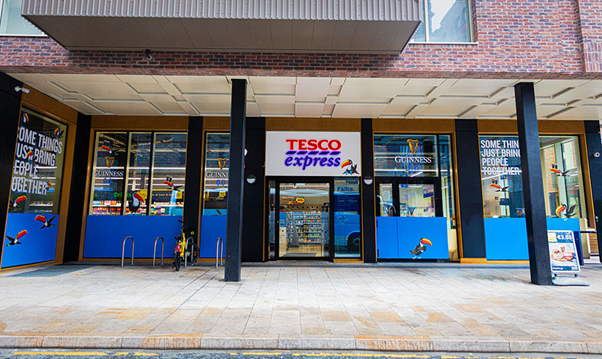
3. Deal-driven behaviour and the changing entry point to retail media
As brands bring retail media closer to core planning, shopper behaviour is evolving in parallel. Recent research highlighted by eMarketer points to a shift in grocery behaviour that is easy to misread as simple price sensitivity. Shoppers are increasingly using digital discounts and retailer apps while physically in-store, but the significance sits in how these interactions create openness to influence and actively reshape decisions along the journey.
Digital discounts are increasingly acting as entry points into retailer ecosystems rather than as post-purchase rewards. Shoppers open apps with intent, creating moments where browsing, promotion exposure and decision-making naturally overlap.
Deal engagement introduces flexibility into decision-making. Shoppers who enter the store with partial preferences often adjust brand or product choice when presented with relevant offers, increasing the role retail media plays in shaping outcomes rather than simply reinforcing existing intent.
Inspiration and deal-seeking now happen alongside physical shopping. Decisions continue to evolve in real time, with the store acting as a place where choices are confirmed, adjusted or switched rather than formed from scratch.
Retailers gain stronger signals through these interactions. Activating offers, searching for discounts or engaging with app-based promotions provides explicit indicators of intent that are more reliable than inferred attention alone.
What stands out here is how willingly shoppers engage with retail media when there is clear utility attached to the interaction. Discounts create permission for influence, allowing media, loyalty and promotion to operate together rather than separately. In practical terms, this changes how retail media and loyalty programmes are executed commercially. Promotional engagement becomes both a conversion mechanism and a source of declared intent, allowing retailers and brands to understand when preferences are still fluid and where investment can genuinely change outcomes across the journey.
Find out more here.

4. AI systems and the pressure on software economics
Underpinning many of these changes is a broader shift in how work moves through systems themselves. Recent market reactions to Anthropic’s release of Claude Cowork Legal highlighted a broader shift that extends well beyond the legal sector. The tool itself focuses on contract review and regulatory workflows, but investor response reflected something larger: growing concern that AI systems capable of completing complex tasks could begin to erode the value of software platforms built around supporting those same workflows.
Anthropic’s approach focuses on task completion rather than assistance, positioning AI as a system that can move work through processes rather than simply accelerating individual steps.
Market reaction was immediate, with significant declines across information, data and software businesses whose value is tied to subscription-based access to specialised workflows.
In contrast, products such as Microsoft Copilot illustrate a different model, where AI enhances existing tools but still relies on users to drive the workflow, reflected in relatively low paid conversion despite widespread distribution.
The distinction increasingly discussed within AI development is between systems that assist users and systems that execute outcomes, with very different implications for pricing, integration and long-term defensibility.
For retail media, the relevance sits in how value is created across the ecosystem. Much of the current stack is built around enabling planning, activation and reporting rather than completing commercial outcomes directly. As AI systems take on a greater share of execution, pressure naturally shifts towards platforms whose value depends on workflow access alone, while data ownership, identity and transaction visibility become more central to how advantage is maintained. The conversation moves away from tools in isolation and towards how systems connect to real commercial outcomes.
Find out more here.

5. Uber Advertising and the emergence of behavioural context as media signal
Uber’s advertising business has moved quietly from experimentation into scale, recently surpassing $2bn in annual revenue while expanding its data collaboration capabilities through the launch of Uber Intelligence. Built on clean-room infrastructure, the platform allows advertisers to combine their own data with signals derived from mobility and delivery behaviour, creating a view of customer activity that extends beyond traditional retail or media environments. As execution becomes increasingly system-driven, the value of behavioural data that explains context around decisions becomes more commercially significant.
What makes this development notable is the type of data involved. Retail media has historically been built around purchase visibility, but Uber’s data sits around the transaction rather than inside it, capturing movement, timing and context that surround decision-making.
Mobility and delivery activity provide insight into behaviour before and after purchase, revealing patterns such as where customers travel prior to shopping, how journeys relate to ordering behaviour, and how location and timing shape intent.
Advertising formats increasingly reflect this contextual positioning, with campaigns tied to journeys, destinations or moments of relevance rather than fixed media placements.
The scale of authenticated users allows exposure to be connected to real-world outcomes, extending measurement beyond digital interaction into observable behaviour.
As advertising becomes a meaningful revenue stream, Uber’s model demonstrates how platforms with strong first-party behavioural data can monetise attention without owning retail inventory.
The more interesting implication sits in how this changes the competitive landscape around data and influence. Retailers have traditionally held the strongest position because they control purchase data, but mobility and delivery platforms introduce visibility into the circumstances surrounding those purchases. That creates a different type of signal, one that helps explain why decisions happen rather than simply recording that they did.
This raises an uncomfortable question for parts of the retail media ecosystem. If understanding intent increasingly depends on signals that originate outside the retail environment, advantage shifts towards organisations able to connect multiple sources of behaviour rather than relying on a single dataset. In practice, this changes how retail media, loyalty and data monetisation strategies need to be executed. Value sits in how effectively behavioural signals are combined and interpreted across systems, not just in owning the final transaction. Retailers that recognise this early tend to treat data collaboration as a commercial capability rather than a compliance exercise, using it to strengthen planning, supplier conversations and long-term customer understanding rather than simply expanding media supply.
Find out more here.

6. US and EU retail media: operational differences taking shape
Many of the themes explored above – data ownership, organisational structure, and how retail media integrates into commercial planning – are also beginning to manifest differently across regions. An opinion piece in The Drum explored the growing divergence between US and European retail media models, highlighting how structural differences in retail markets, regulation and organisational maturity are shaping how networks develop on either side of the Atlantic.
US retail media networks have generally scaled faster, driven by large retailer concentration, established ecommerce infrastructure and strong advertiser demand for closed-loop measurement.
European retail media development has progressed more cautiously, influenced by fragmented retail landscapes, stricter data regulation and more complex supplier relationships.
Organisational ownership and operating models vary significantly, with European retailers often integrating retail media more closely into commercial and trading structures.
Differences in data availability and privacy expectations continue to shape how measurement and targeting capabilities evolve across regions.
What this highlights is that retail media development is not following a single global template. Market structure, regulatory context and retailer economics materially influence how networks evolve and where value is captured. For brands and partners operating across regions, this increases the importance of adapting strategy to local operating realities rather than assuming approaches developed in one market will translate directly to another.
Find out more here.
Across this month’s stories, retail media appears less as a single channel and more as a capability spreading across industries, planning cycles and systems. Industries beyond retail are applying similar principles around identity, intent and measurable outcomes, shopper behaviour continues to show how decisions remain open later into the journey, and AI systems are beginning to alter how work moves through organisations.
At the same time, brands are repositioning retail media within core marketing planning, while regional differences continue to shape how networks develop in practice. Together, these developments reinforce how retail media increasingly operates as part of a wider commercial framework spanning planning, activation, loyalty and measurement.
This places greater emphasis on coordination and interpretation. Media exposure, customer interaction and transaction data now sit close enough together to influence decision-making in real time, provided organisations are structured to act on those signals. The choices being made now around data collaboration, organisational ownership and planning integration are likely to shape performance more than the introduction of new formats or inventory. These shifts are gradual, often operational rather than visible, but they continue to redefine how retail media delivers value once scale and scrutiny arrive together.