
Retail Media Radar – April 2026: From agentic infrastructure to commercial reality
Last month’s Radar explored the building blocks behind agentic AI - the tools, systems and standards that let AI find information, connect with services and start carrying out tasks.
What’s become clearer since then is how these foundations are beginning to show up in the real world.
Rather than one big shift to AI-led commerce, change is happening at different speeds across the customer journey. Discovery is moving quickly, transaction capabilities are developing more steadily, and physical retail still plays an important role - shaped more by convenience and behaviour than simple access.
In this month’s stories, retail media sits across all of these layers - linking how information is surfaced, how transactions happen, and how physical spaces continue to drive measurable engagement.
AI-driven discovery and the role of product information
Following last month’s focus on agentic infrastructure, it’s becoming clearer where AI is gaining traction in shopping journeys first.
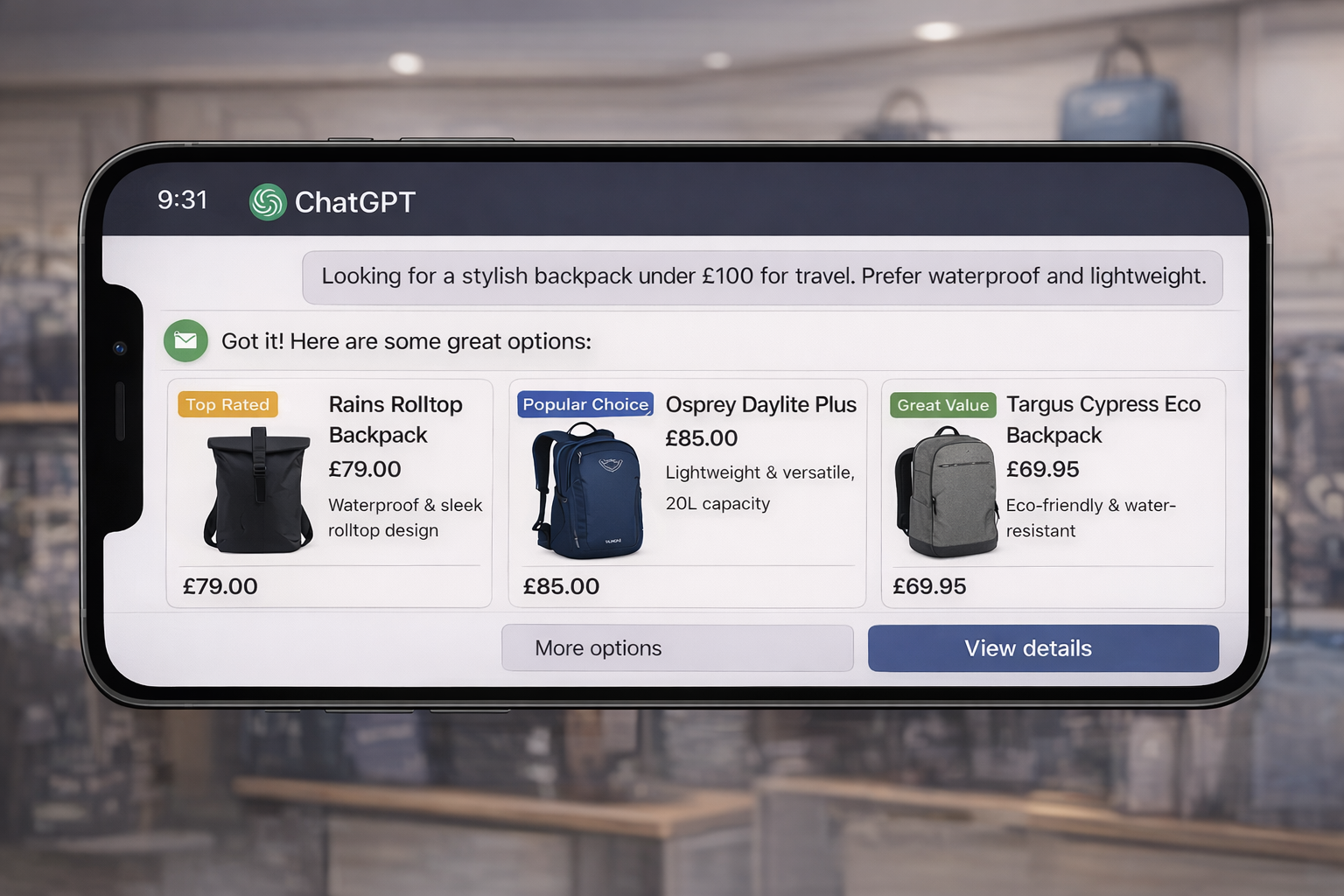
ChatGPT has shifted towards supporting product discovery, comparison and browsing - with less emphasis on handling full checkout within the interface.
This reflects how shopping actually works. Discovery and comparison are relatively simple - they rely on organising information like price, reviews and product attributes. Transactions are more complex, involving payment, fulfilment, loyalty and customer service.
As a result, AI is being adopted first in the earlier stages of the journey - where decisions begin to take shape. Even if the purchase happens elsewhere, much of the influence sits in how options are narrowed and evaluated.
That shift is changing how products are surfaced. Instead of fixed placements, products are retrieved and ranked dynamically using structured data such as pricing, availability, attributes and relevance signals.
This creates a new kind of visibility. Products need to work not just for human browsing, but for systems interpreting them programmatically. The quality and structure of product data increasingly determines how often and how effectively products appear.
Retail media still plays a role, but influence is extending beyond traditional placements. Alongside sponsored listings and banners, impact is also driven by how products are represented in the data these systems rely on.
The shift is gradual, but clear - as AI becomes more embedded in discovery, influence is moving closer to the underlying information that shapes decisions.
Find out more here.
Agentic payments and the build-out of transaction capability
Alongside changes in discovery, the transaction layer is beginning to evolve through developments in payment infrastructure.
Stripe, Visa and others are introducing frameworks designed to support system-led transactions, enabling AI to initiate payments within defined controls and standards.
Payment infrastructure is being adapted for system-initiated transactions
Emerging protocols enable coordination between services and platforms
Security, authentication and governance remain central to adoption
Development is focused on capability and standards rather than immediate behaviour change
These developments extend the foundations outlined last month, moving from how systems access information towards how they may begin to act on it.
For now, this layer remains more foundational than behavioural. While the ability for systems to transact is being established, the conditions under which consumers delegate that control are still forming. Payment, identity and fulfilment introduce a level of trust and accountability that is materially different from discovery and comparison.
As a result, development is focused on enabling capability rather than driving immediate adoption at scale.
For retail media, the relevance sits within how commerce systems are becoming structured around machine-readable logic.
Pricing rules, promotion mechanics, stock availability and eligibility criteria all need to be accessible beyond user interfaces, shaping how decisions can be executed as well as how they are influenced.
This begins to connect retail media more directly with ecommerce operations, data architecture and commercial logic, extending its role beyond activation into how systems support both decision-making and transaction.
Find out more here.
Why Agentic Checkout Isn’t Landing (Yet)
Despite the effort to bring payments within the agentic shopping experience, the past few months have sharpened the debate around “agentic checkout” – the idea that AI assistants don’t just help you shop, but complete the purchase on your behalf.
Early experiments suggest that vision is running ahead of reality.
Walmart’s trial of in-chat checkout within ChatGPT delivered conversion rates roughly three times lower than its own website, with many customers preferring to complete purchases in familiar retail environments . The experience exposed a key limitation: while AI can understand intent, the complexity of fulfilment – stock, delivery slots, loyalty, returns – still sits within retailer systems, not the AI layer.
As a result, the industry is recalibrating.
Rather than pushing full “agentic checkout”, both platforms and retailers are shifting focus toward discovery, comparison and assisted decision-making – areas where AI adds immediate value. Even OpenAI appears to be dialling back embedded checkout in favour of directing users back to retailer-owned journeys.
The implication is clear: AI is already reshaping how shoppers decide what to buy, but not yet where they transact. For now, checkout remains a point of control retailers are reluctant to cede – and consumers seem reluctant to abandon.
Find out more here.

Tesco’s AI Assistant – A Big Moment for Retail Media
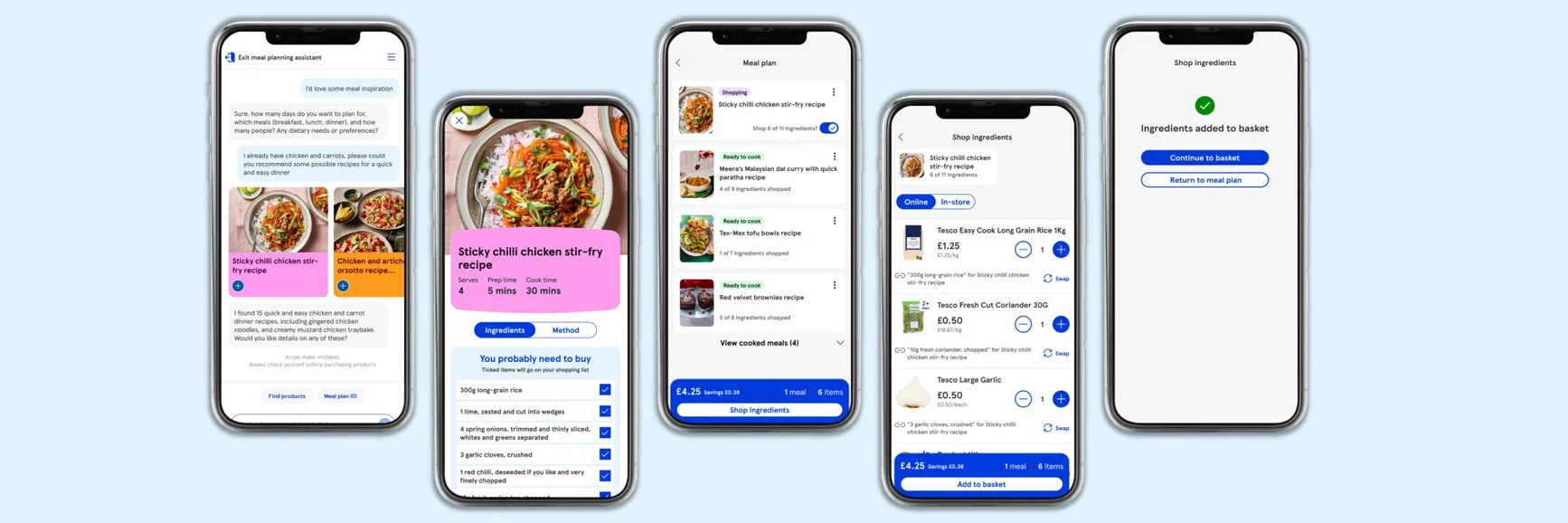
Tesco is trialling an AI-powered shopping assistant with 280,000 colleagues ahead of a customer rollout - and it could reshape how retail media works.
The assistant helps shoppers plan meals through conversation and automatically builds baskets based on preferences and past behaviour. That’s a shift from traditional recommendations to AI actively shaping the entire shopping mission.
For retail media, this changes the game:
The key battleground moves from search and shelf to the planning stage
AI becomes the decision engine, not just a recommendation tool
Influence shifts from “sponsored products” to “sponsored outcomes”
If shoppers start with “What should I cook this week?”, the assistant decides what goes into the basket - and what doesn’t.
The implication: winning in retail media will increasingly mean influencing the algorithm, not just buying placement.
Tesco’s trial may look like a CX upgrade - but it’s really a signal of where retail media is heading next.
Find out more here.
Tesco’s new AI-powered assistant
Parcel lockers and the role of physical convenience in driving behaviour
Online shopping keeps changing, but what happens in physical stores still matters. People value convenience, and they'll go where things are easy.
Tesco's trial with Evri parcel lockers is a good example. It's part of a broader shift: bringing practical, everyday services into stores so people can collect, send, or return parcels while they're already there.
The benefits are straightforward. Parcel lockers give people a reason to visit a store they might not have visited otherwise. Collections and returns bring them back regularly. And once they're inside, many end up browsing or buying something extra. Some research suggests these locker visits frequently lead to unplanned spending.
The bigger point is simple. When a store solves a real, everyday problem, it attracts visits that go beyond a planned shop. And once someone is through the door, there's a natural chance to catch their attention, whether through what's on the shelves, on-screen advertising, or something else entirely.
For retail parks, this is especially relevant. Parcel lockers create steady, regular foot traffic that isn't tied to any particular purchase. That traffic spreads to nearby stores too, increasing the likelihood of extra spending across the park.
Pair this with in-store screens, signage, or app notifications and those visits become trackable moments that link what people do in a physical space to actual commercial results.
As more product discovery shifts online (and becomes increasingly automated), physical locations that offer genuine, everyday usefulness are likely to stay important in shaping where people go and what they buy.
Find out more here.
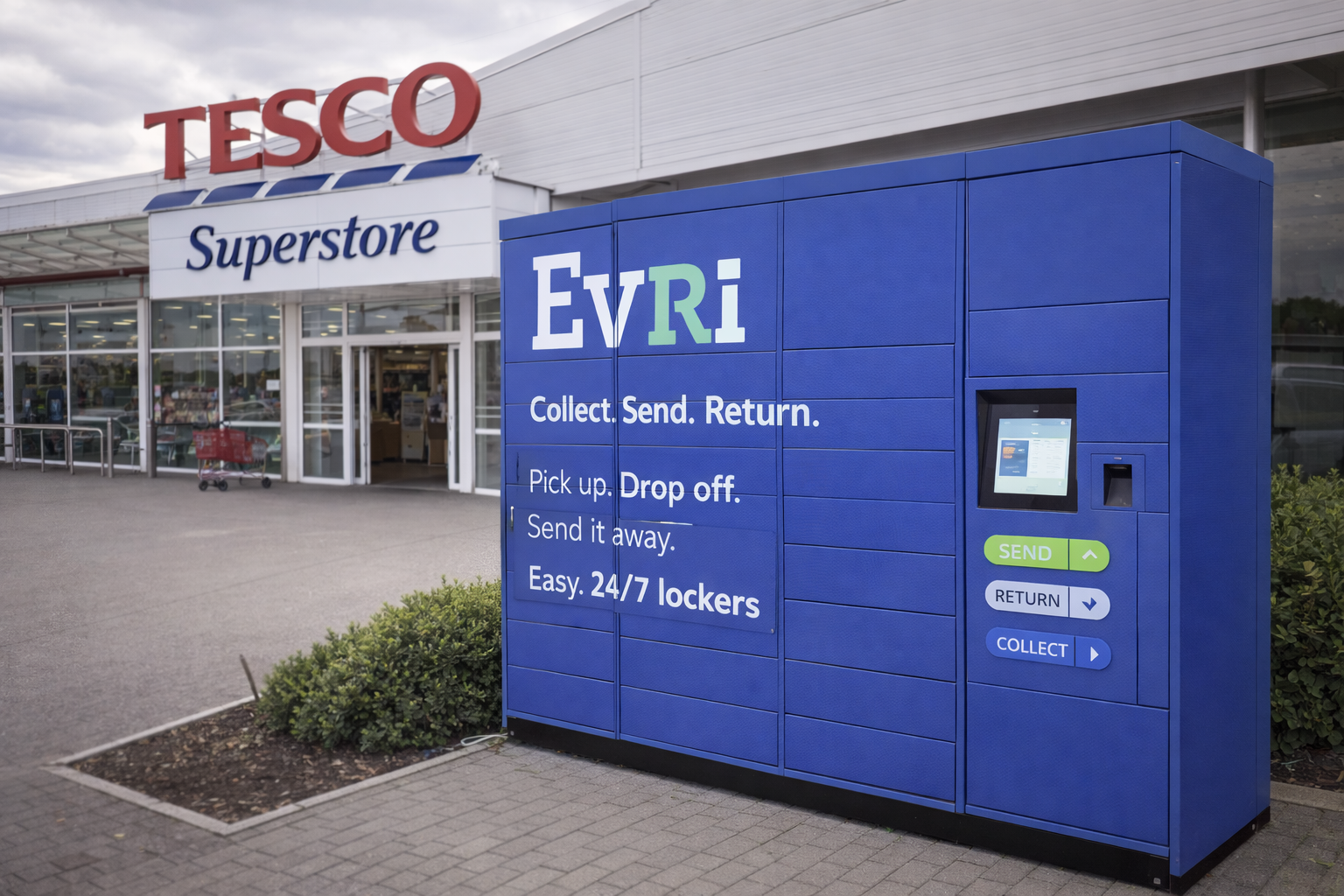
Tesco’s new Evri trial designed to drive footfall, repeat visits and incremental purchases.
In-store measurement and the growing accountability of physical media
The biggest thing holding back in-store retail media has always been measurement. That's now starting to change.
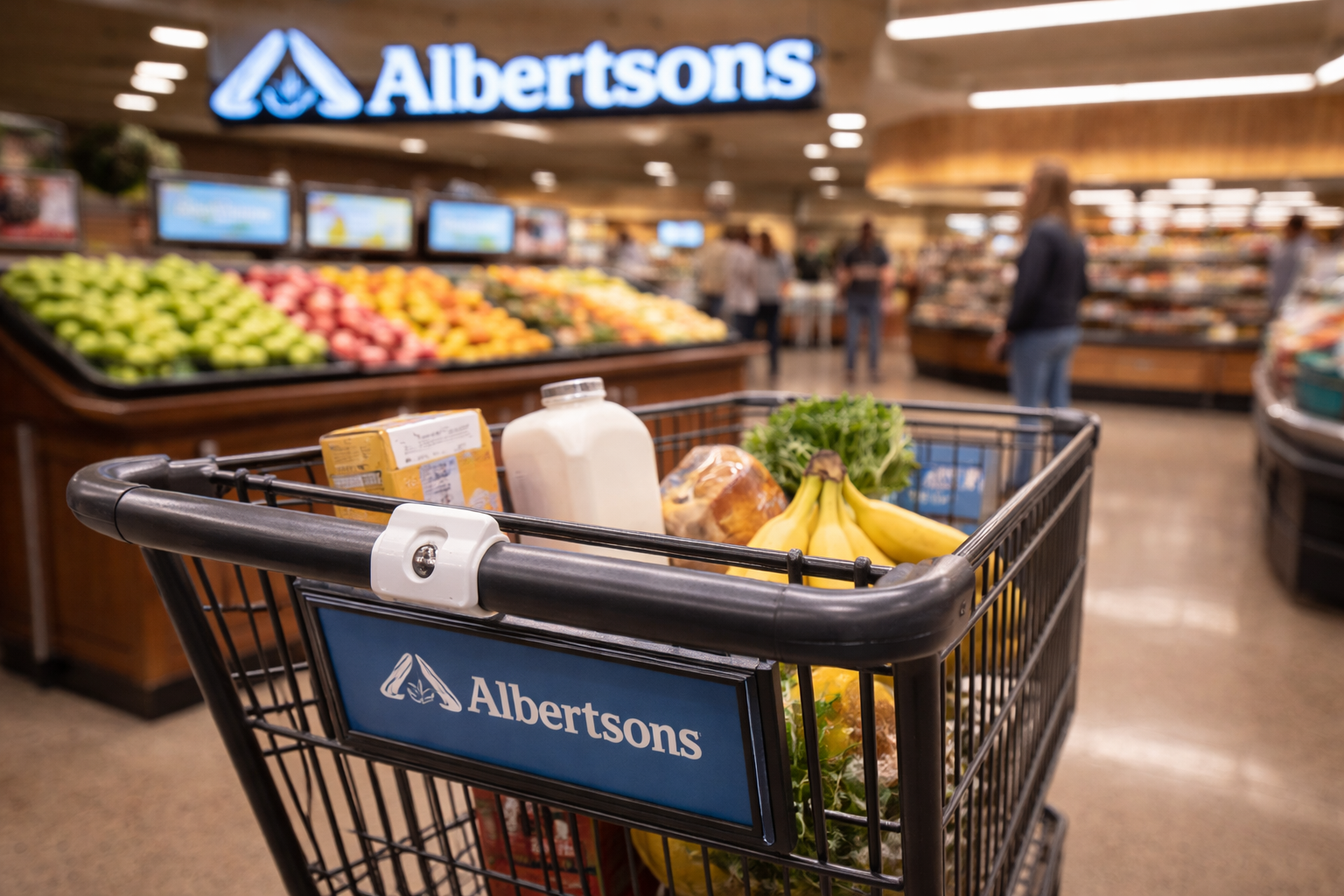
Albertsons recently introduced beacon technology in shopping carts and baskets. It lets them track how shoppers move through the store, how long they spend near specific displays, and then connect that exposure directly to what they actually bought.
At the same time, industry bodies like the Interactive Advertising Bureau are working on standardised ways to measure in-store media, moving away from rough estimates of who might have seen something and towards confirmed proof that someone was actually there.
Measurement is shifting from "they were probably near it" to confirmed exposure based on physical presence and time spent
Sensor technology is making it possible to track shopper movement and behaviour more precisely
Exposure data can now be linked to transaction records, making it possible to see whether it actually influenced what someone bought
There's growing momentum behind industry-wide standards, because without consistency, spending stays limited
This isn't really about new screen formats or flashy displays. It's about making in-store advertising something brands can trust enough to spend on seriously.
The imbalance has been obvious for years. Most retail transactions still happen in physical stores, but almost all retail media spend goes to online channels. The reason isn't that in-store advertising doesn't work. It's that brands haven't been able to prove it works, not reliably and not at scale. Brands spend where they can measure. That's always been the rule.
Without consistent, comparable numbers, in-store media stays hard to plan, hard to justify, and hard to grow, no matter how effective it might actually be.
What's changing isn't just that more data is available. It's that the expectation has shifted. Retailers and brands now expect in-store media to be held to something closer to the standards they're used to online: verified views, time-stamped exposure, location-specific measurement.
That brings a new kind of pressure too. Once you can measure whether someone actually saw an ad, you can also ask whether it was worth what you paid for it. That changes the commercial conversation.
In-store media stops being sold as "prime space in a busy store" and starts being treated as inventory that has to prove its value. That affects how it's priced, how it's improved, and how it fits into a brand's wider advertising plans.
It also opens up a bigger question. If physical stores can demonstrate a measurable, provable impact on sales with the same confidence as online channels, in-store media doesn't just compete for retail media budgets. It starts competing for broader brand advertising budgets too.
Find out more here.
Creative, attribution and the operationalisation of retail media
Alongside better measurement, retail media is moving into a more practical, operational phase.
Unlimitail's recent work is a good example. Unlimitail is a joint venture between Carrefour and Publicis Groupe, built to deliver retail media at scale across continental Europe, Brazil and Argentina. They now work with over 30 retail partners, and their latest developments combine AI-powered creative production with attribution that connects media exposure directly to in-store sales through loyalty data.
Creative production is being standardised to work across formats and environments at scale
Campaigns can be quickly adapted for different placements, audiences and contexts
Attribution is based on real data, linking what someone saw to what they actually bought
In-store and online performance are being measured within a single system
The earlier phase of retail media growth was about expansion: more networks, more ad space, more formats. That created scale, but also a mess of disconnected systems. What's happening now is a shift towards consistency and consolidation, where the ability to operate efficiently matters more than trying new things.
Advertisers are increasingly focused on:
Consistent measurement across networks
Standardised reporting and attribution
Faster campaign setup and quicker iteration
Planning across channels, not just within them
Creative becomes less about individual ads and more about systems that generate and deploy content at scale. Attribution moves from one-off campaign reports to ongoing measurement of whether spending actually made a difference.
At the same time, boundaries between retail media, trade spend, pricing and promotions are starting to blur. These have traditionally been managed separately, with little visibility of how they interact. As measurement improves, brands are asking a more direct question: which combination of spending actually drives additional sales? Answering that requires a joined-up view of media, promotions, pricing and customer behaviour, all measured against the same outcome.
Loyalty data is the link that makes this possible, connecting what someone was exposed to with what they did, and helping brands understand how different touchpoints influence decisions over time. The commercial value of that data shifts from selling access to audiences towards helping brands make better decisions: knowing when a purchase decision is still open, what might influence it, and which combination of activity works best.
This is also where weaker offerings get found out. Networks relying on disconnected tools and manual processes create friction and make it hard for brands to scale investment confidently. By contrast, networks built on integrated infrastructure, connecting media, data, loyalty and measurement, start to behave less like advertising channels and more like commercial platforms. That distinction matters more as the market matures.
Find out more here.

Building on last month’s focus on agentic infrastructure, the more useful question now is not how quickly AI will reshape commerce, but where commercial advantage is actually moving. Across these developments, three shifts are starting to take shape.
The first sits in discovery. As AI systems become more involved in how options are surfaced and evaluated, influence begins to concentrate around the inputs those systems rely on. Product data, pricing logic, availability, promotion mechanics and customer signals are no longer just operational considerations. They become the levers that shape how decisions are made.
Retail media built purely on visibility starts to look like a legacy model in a system where decisions are increasingly shaped before anything is seen.
This changes where investment needs to sit. If the outcome is being influenced upstream, within systems that retrieve and interpret information before a shopper ever interacts with an interface, then activation alone becomes a partial strategy. The distinction between media, merchandising and data starts to break down, with advantage moving towards those who can connect them effectively.
The second shift sits in how value is captured. As transaction infrastructure becomes more programmable, the ability to control and expose commercial logic becomes more important than access to inventory alone. Retailers and platforms that can structure their data, pricing and eligibility rules in ways that are accessible to systems are better positioned to participate in how transactions are executed.
Owning data is no longer the advantage it once was. Most large organisations already have it.
The advantage sits in whether that data can actually be used - exposed, activated and integrated into the environments where decisions are being made. Retail media networks that treat data as a reporting output will struggle to compete with those that treat it as a commercial product.
The third shift sits in physical environments. As discovery becomes more system-driven, stores are not becoming less relevant. Their role is becoming more defined.
Utility is emerging as a driver of behaviour. Parcel lockers are one example, but the underlying pattern is broader. Locations that give customers a reason to visit, beyond a single purchase mission, create repeatable interaction that can be measured, extended and monetised.
Footfall on its own becomes a weak metric in that context. What matters is the quality and intent of that visit, and how it connects to measurable outcomes. Retail environments that combine utility, data capture and media begin to operate as part of the same system that governs discovery and transaction, rather than sitting separately from it.
Taken together, these shifts point towards a more integrated commercial model. Retail media, loyalty and data monetisation are no longer adjacent capabilities. They are increasingly operating on the same underlying infrastructure, shaping how customers are understood, how decisions are influenced and how value is captured across the journey.
The practical implication is less about adopting new formats and more about how organisations are structured. Those that continue to treat media, data and commerce as separate functions will find it harder to compete in an environment where influence, decision-making and transaction are more closely connected.
Those that align them begin to operate within the same system as the customer journey itself.